


I have been taken to task, more than once now, for a single word. Not for an argument, not for a claim about treaties or seats or the Crown, but for one plain word I keep using: settler. It lands on certain readers like an accusation, and a few have told me so with real heat, some on their way out the door. I have thought about this more than the size of the word might seem to warrant, because the trouble it causes is not really about the word at all. It is about what people believe is hidden inside it. So let me take it out and turn it over in the light, and say plainly what I mean by it and what I do not.
I use the word to describe, not to prescribe. That is the whole of it, and almost everything else follows from getting that distinction straight. When I call myself a settler — and I do, without flinching and without apology — I am not making a confession or accepting a charge. I am locating myself on a map. The word tells you where I stand in relation to how this country came to be. It says nothing whatever about my character, my worth, my politics, or what I owe in my own conscience. It says only this: that I am not a member of the nations who were here, governing this land, when my Crown arrived and made agreements with them. I came by the other road. So did my family, and so did most families in this province. There is no shame folded into that fact, and I carry none, and it costs me nothing to say so. It is simply true, the way a contour line on a map is true. It describes a position. It does not pass a sentence.
But the word rarely arrives clean anymore, and I understand why people bristle. It has been put to other uses. There is a strain of progressive and radical thought that wields settler not as a description but as a verdict, a thing you are meant to feel sad about, and then guilty about, and finally to atone for. In that mouth the word comes wrapped in a quiet suggestion that your very presence here is a standing wrong, that you live on stolen ground and ought to feel the theft in your bones every morning. Said that way, it stops being a word on a map and becomes a finger pointed at your chest. So when a reader recoils from it, I do not think he is being unreasonable. He is reacting, correctly, to the sentence smuggled inside the description. My quarrel is not with him. It is with the people who did the smuggling.
And here is where I part company with that strain, and sharply. What it has done is take the whole tangled, living, two-sided relationship between peoples and press it flat into a shape we have all seen before: oppressor and oppressed, settler and native, two fixed classes locked in permanent antagonism. It is the old Marxist move performed with new costumes, the same dialectic of the guilty and the wronged, only with the language of class quietly swapped out for the language of ancestry. And like every binary of that kind, it is false, because human beings and the histories they make do not sort themselves into two clean piles of villains and victims. They never have. The binary survives not because it is true but because it is simple, and because it is generous with the one thing political movements are always short of: someone to blame.
What troubles me most about it, though, is not that it is false. It is that it is useless to the very people it claims to defend. A relationship frozen into oppressor and oppressed cannot move. It can only be managed. It casts Indigenous nations forever in the role of the wronged and the settler forever in the role of the wrongdoer, and two parties pinned into those roles can do nothing together but re-enact the grievance, year after year, with no door out. And year after year is exactly how it has gone. Meanwhile a whole class of people has grown up around the managing of it — the consultants and the officers, the framework-writers, the academics with careers built atop the suffering — and that class has no reason on earth to want the quarrel resolved, because the quarrel is what it lives on. The permanent tension is not a problem to them. It is the product. Resolution would put them out of work. So the binary endures, and it serves them handsomely, and it does precisely nothing for the child on a reserve still waiting on clean water, or for the nation still waiting on a seat at a table where the real decisions get made.
So let me be plain about where the line actually falls, because the binary depends on no one ever looking at it too closely. When I say settler, I am not drawing the line at the first human footprint on this continent. I could not draw it there if I wanted to, and neither can anyone else, because that line is lost to deep time and always will be. The line I mean is not prehistoric. It is legal, and it is written down. It falls exactly where the Crown — my Crown, the same one I appeal to the moment I am wronged by my neighbour or my government — arrived to find organized nations already here, in possession of the land and governing themselves, and chose to enter into agreements with them. That is the line. Everyone who comes to this place by way of that Crown and those agreements, rather than as a member of the nations the Crown treated with, stands on the settler side of it. I do. That is all the word has ever meant in my hands.
Which is why I have so little patience left for the argument that turns up like clockwork the instant any of this is raised: that other peoples were here before the Indigenous nations too, that those nations displaced still earlier ones, that if you only run the tape back far enough we are all settlers and the whole question politely dissolves. I want to call that argument what it is. It is a weak argument wearing the costume of a strong one. It dresses itself up as historical honesty, as a brave willingness to ask who really came first, when its actual job is to take a real, dated, documented obligation and lose it in an unanswerable fog about the last ice age. You cannot relitigate who walked this ground ten thousand years ago in order to wriggle out of a treaty your Crown signed in 1763. The agreements do not turn on who came before. They were made with the nations who were here, as nations, on the day they were made. That is the only “first” the law has ever cared about, and no amount of speculation about the Pleistocene moves it an inch.


There is usually a second assumption hiding underneath that one, quieter and worth dragging into the open: the notion that those older displacements somehow stain the Indigenous claim, as though a people had to be innocent to be owed anything. This is where an old ghost walks back into the room, the one the eighteenth century called the noble savage. It is an ancient European habit, this one, usually laid at Rousseau’s door though he never used the phrase and it is older than him by far: the habit of imagining the native peoples of the New World as innocents, children of nature, peaceable and pure and uncorrupted until the wicked European turned up to spoil the garden. It was always a fantasy. And the nations of this land were nothing of the kind, because they were human. On this very coast the Haida and the Tlingit were feared warriors and slaveholders who raided the length of the seaboard and counted, in some villages, a quarter of their people as slaves taken in war. In the east the Haudenosaunee broke and scattered whole confederacies in the Beaver Wars, leaving the Wendat, the Erie, and the Neutral gone or absorbed. There was conquest here, and displacement, and slavery, and there was also diplomacy and alliance and empire, long centuries before any European laid eyes on the place. Because that is what human beings do, on every continent, in every age.
And I say all of that not to diminish them by a single degree, but to dignify them. A people romanticized as innocent is a people robbed of its full humanity, frozen into a diorama and admired the way one admires a sunset, beautifully, from a safe distance, and with no obligation owed to a thing so passive and so pure. The nations of this land were not sunsets. They were nations: governing, fighting, holding ground and losing it, striking bargains and keeping some and breaking others, doing all the hard and human work of peoples who hold real power. That is exactly why their sovereignty was real. And it is exactly why the agreements the Crown made with them carry the weight they do. You do not sign treaties with children of nature. You sign them with powers. The messy, warlike, fully human history is not an embarrassment to the claim. It is the foundation of it.
So I come, at the last, to the reader who tells me, with some feeling, that he is simply a Canadian, full stop, and will answer to no other label. I want him to know I am not coming at that pride from somewhere outside it. I share it, and then some. I am not merely a Canadian; I am a besotted one. I read this country’s history for pleasure and study it with something close to zeal. I once wore the uniform of its Armed Forces as an officer, and I did not put it on for a paycheque. I put it on because I believe, plainly and without embarrassment, that this is the best country on earth, and one of the very few with any honest standing to go out into the world and try to set things right. So when a man tells me he is proud to be a Canadian and wants no other word, I do not hear a stranger. I hear myself.
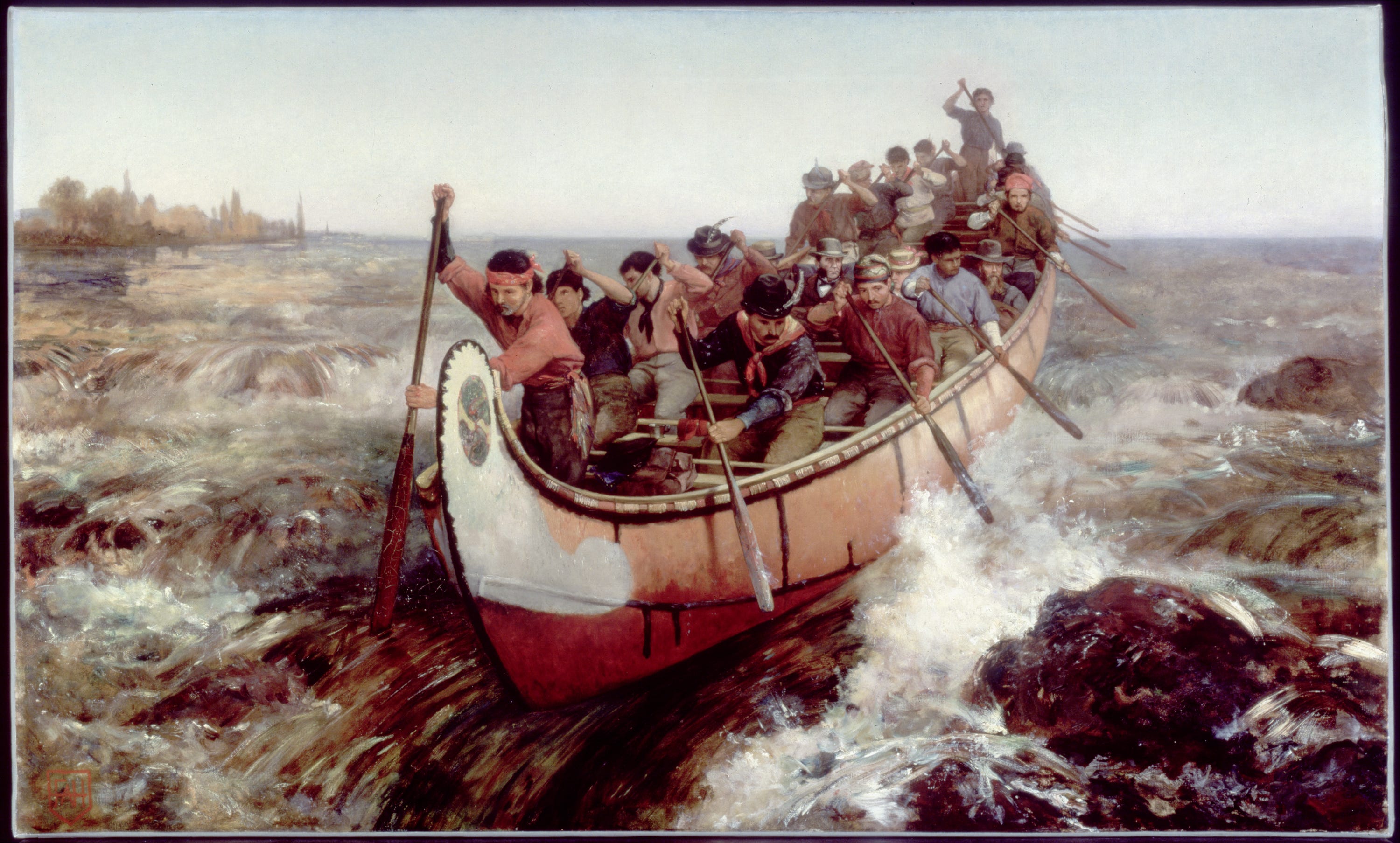
And yet I would ask him to sit a moment with where that proud word actually comes from, because the truth of it is stranger and finer than the pride tends to know. Canada is not a European word at all. It is Iroquoian — kanata, a village, a settlement — overheard by Cartier from his Indigenous guides and carried off to name half a continent. And the first people the French called Canadiens were not the French. They were the nations already here. Only later did the of-the-land French take the name for themselves: the habitants and the traders, the locally born, the ones who had grown into this place rather than merely landing on it. When the gentlemen back in France used the word of them, it carried more condescension than pride, the sense of a people too rough, too far from Paris, too much of the land and the people. My own family was among them. They came as fur traders, and they were mocked, by the gentlemen of France and the gentlemen of England both, for going too native: for dressing like the nations they lived and worked beside, for taking on the customs and the kin and the whole cast of mind of a continent the establishment had only ever meant to harvest. There is a deep irony in people of that descent now wearing the name Canadian as though it raised them above and apart from the very peoples it first described, and once mocked us for coming to resemble.
So I understand the pride better than the reader might guess, and I honour it. But Canadian, for all of that, remains a roof that shelters everyone and therefore distinguishes no one. The Songhees are Canadian. So am I. The word is true and it is nowhere near enough, because it cannot tell us what is owed between the nations who were here and the people who came after. It was built, over centuries, to do the very opposite, to fold that distinction into one shared citizenship and let it rest. And the distinction is the entire question. To answer it with “I am Canadian” is not to settle the hard thing. It is, with the best will in the world, to decline to look at it.
I am not asking anyone to feel guilty. Guilt is a useless currency and I have none to spend or to collect. I am asking only that we be able to say plainly where each of us stands, because you cannot honour an agreement you will not even admit you are a party to. Reconciliation — the real article, not the industry that has stolen its name — has to begin there, with the relationship named honestly and out loud. And you cannot name a relationship while refusing to hold half of its vocabulary.
So I will keep using the word, because it is the truest one I have yet found. Never as a charge. Always as a description, a contour line on the map of how this country was truly made. And I will correct one thing I said near the start, because working all of this through has shown me it was too glib. I said the word costs me nothing. That is not quite right. It does cost something, because from that one plain word flows an obligation to the agreements we entered into and have inherited whole, to the promises my Crown made and handed down to me whether I asked for them or not. To call myself a settler is to admit, out loud, that those promises bind me. And honouring what you have been handed, especially when it asks something of you that you would rather not give, is not the soft position, and it is not the fashionable one. It is the most conservative thing a person can do.
The obligation, I am certain of. The word itself I hold more loosely, the way a man ought to hold a tool he picked up on his own and would set down without complaint the moment someone handed him a better one. I might well be wrong about settler. It may be the word is simply too battered now to do honest work, too long swung as a club, too thoroughly claimed by people who only ever meant it to wound. If that is so, then I am asking the question plainly, and with no trap laid in it: what word would you have us use instead? Not Canadian, which we have seen is too broad to carry the distinction and was built over centuries to dissolve it. Some other word, then. But it has to do the real work. It has to name, honestly, the difference between the nations who were here and the people who came after, because that difference is the whole of what reconciliation must reckon with, and no silence about it has ever made it smaller.
There is only one thing I will not do, and it is the very thing this project of mine exists to refuse. I will not let the loudest and the angriest be the ones who decide what our words are allowed to mean. They did not invent settler, and they do not own it, any more than they own treaty or nation or Canadian. They took good and useful words and bent them into instruments of blame, and the answer to that is not to drop the words and back quietly away. It is to pick them up again, to define them plainly, to use them accurately, and to put them to work for something far better than grievance. That is what I am trying to do here, in my own plain way. Not to judge our language by what has been made of it in its worst hands, but to reclaim it, and to aim it at the only end that was ever worth aiming at: lives of dignity, for all of us, First Nations and settler together, in this country I cannot help but love.
Your essay has been very helpful in coming to a useful definition and understanding of the term settler, thank you.
Certainly your understanding of the craft of language, it's potential, beauty, risk and more, brings depth to the discourse. Greatly appreciated.
I find myself less in disagreement than in a sort of parallel development as I wonder if you settled here, or are indigenous, that is, born here, in and of this land. I wonder, too, if the many who have come here from far off lands around the globe, settled, assimilated in the Canadian mosaic frame rather than the melting pot down south, see themselves in the term as it is used today. I agree, it is misused.
There are also those who come for a relatively secure base from which to operate and continue remote disputes that are less, even un-related to this diverse land, essentially an exploitation of the society into which they have settled. That's a problem to address. Doing so is fraught with misuse of language.
I arrived as a kidnapped child (another story for another time) and found myself energized by the aspirational nature of Canadian society as my young eyes perceived it in 1967/8. I was ignorant, then, of the specifics of history (be that the expulsion of the Acadians, the Métis revolution, the violence and the beauty of pre-contact norms akin to similar stages of societal development world-wide). The profound and lasting affect is what I see in your last sentence, paraphrased, <i>aiming</i> at lives of dignity for all of us.
By age 12, I had lived within and had experience of multiple ethnicities and cultures in differing jurisdictions in which the prejudices of one group toward others had been exposed, not as a reflection of any one group toward any one "other" but as a human propensity. (It was the right age for such observations and I wonder if the contrast would have been as stark had we moved to, say, Ontario.) That observation has continued, here and in several countries in which I have worked and loved in Asia and Europe.
What I see today is, again, a parallel course, internalized for many. On the one hand, the aspirations of a society fair and just for all. On the other, an elevation of status measured by degrees of real and perceived persecution. The identity cards as the recent NDP convention are but one, to me horrific, example of how we have embraced division in the guise of inclusion. We suffer, too, from a tendency to aggregate in ways that lose the individual. Language grappling with that aggregation invites language that parses meaning and sometimes assigns intent that is far from truth.
I'm looking forward to more of your writing—and who knows one day may find (make?) time for my own!
P.S. The html is in place of italics which Substack does not provide in comments