


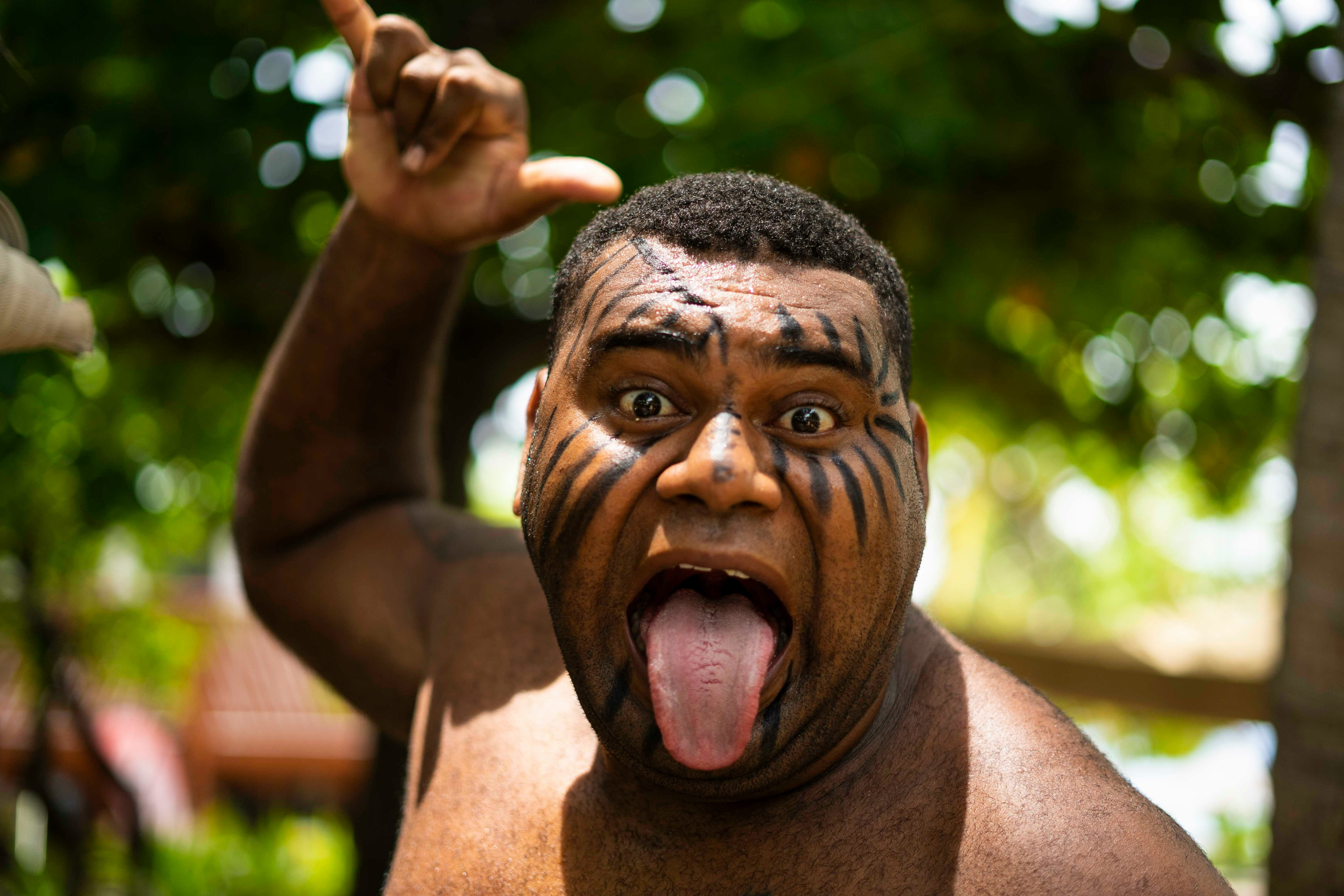
Picture a New Zealand schoolyard. Children of every background, Māori, Pākehā, Pacific Islander, Asian, feet planted, voices unified, performing the haka together. The stomping. The tongue. The eyes. The ancient words filling a modern classroom with something that has no equivalent anywhere else on earth.
Now picture the All Blacks before a test match. The whole team. The whole nation in that moment. A war dance born in Māori tradition performed by every New Zealander regardless of ancestry, feared and respected by opponents from London to Buenos Aires to Tokyo. Players who grew up in suburbs with no Māori ancestry performing it with a ferocity and pride that is entirely genuine. Because it is theirs too. Because New Zealand made it theirs together.

Now ask yourself the question this piece is built around.
What is BC’s equivalent?
What shared cultural moment between Indigenous and non-Indigenous British Columbians looks anything like that? What ancient tradition have settlers adopted with genuine pride and Indigenous peoples shared from genuine strength? What do we perform together? What do we have that a child of any background in this province can call their own while honouring where it came from?
Take your time. I’ll wait.
That silence is not a coincidence. It is not a reflection of cultural difference or geographic complexity or the particular difficulty of our situation compared to everyone else’s. It is the direct result of a policy choice. A choice Canada made and New Zealand didn’t. A choice to manage Indigenous peoples from outside our institutions rather than welcome them inside. A choice to consult rather than represent. A choice that has now been made consistently for over fifty years and produced nothing that looks anything like a haka performed by a whole society in shared pride.
The haka is not a government program. It was not designed by a ministry or mandated by legislation or recommended in a truth and reconciliation call to action. It emerged. Organically. Over generations. Because Māori had real standing in their society. Because they sat in parliament with real votes and real power. Because when you are a genuine partner in a nation rather than a supplicant outside it you share your culture differently. You share from strength. You share because you choose to. You share because the society around you has demonstrated through its institutions that it takes you seriously as an equal.
That is what the haka actually is. Not a performance. Not a symbol. Not a gesture. It is the living proof of what genuine political partnership produces over time. It is 157 years of a decision made in 1867 visible in a single moment: a schoolyard, a rugby pitch, a funeral, a graduation, wherever New Zealanders come together and reach for something that is authentically theirs.
Māori did not lose their culture by participating in shared governance. They expanded it until it became the culture of a whole nation. The scholars who warned that parliamentary representation would absorb and dilute Indigenous identity have been answered not by argument but by the All Blacks performing the haka in front of eighty thousand people in Johannesburg. You cannot argue with that. You can only ask why we don’t have it.
Some will point to ongoing tensions in New Zealand: debates about who has the right to perform haka, moments where Māori feel their rights are being overridden by parliamentary majorities. Good. Those tensions are not evidence the model has failed. They are evidence it works. Māori have the standing and the voice to have those arguments openly and on their own terms inside the institutions that matter. That is democracy operating exactly as intended. What you are seeing is not a broken system. It is a functioning one.
In BC we have land acknowledgements. Carefully worded statements read from cards at the beginning of meetings by people who often couldn’t locate the territory on a map or tell you a single thing about the Nation whose name they just mispronounced. We have government press releases about new consultation frameworks. We have academic papers about decolonizing institutional spaces written by people who have never been to the communities those spaces are supposed to serve. We have DRIPA — passed unanimously in celebration and now being suspended in panic.
We do not have a haka.
We do not have anything that a child of any background in this province can stand up and perform alongside an Indigenous elder and call genuinely shared. We do not have the cultural proof of political partnership because we have never built the political partnership that makes cultural sharing possible.
Not abstract policy. Not legal theory. Not another framework. The haka. What it represents. What it took to build it. And why BC, with its extraordinary Indigenous cultures, its vast natural wealth, its diverse and generous population, deserves to spend the next 157 years building something just as powerful and just as real.
New Zealand didn’t wait for perfect. They made a decision and built something across generations that nobody would now dream of undoing.
Somewhere in BC right now there is a child — Indigenous, settler, immigrant, all three in one — who will never perform anything together with their classmates that carries the weight of what they share. That is not inevitable. It is a choice. And it is one we can unmake.
The status quo is a tragedy of lost opportunity to rectify systemic failures and create a future of possibility for all.
I think this was performed on the jetty by the ships company of a HMNZS that had been in Canada for refit before embarking and sailing her back home. It was a display of power and pride. Quite breathtaking.