


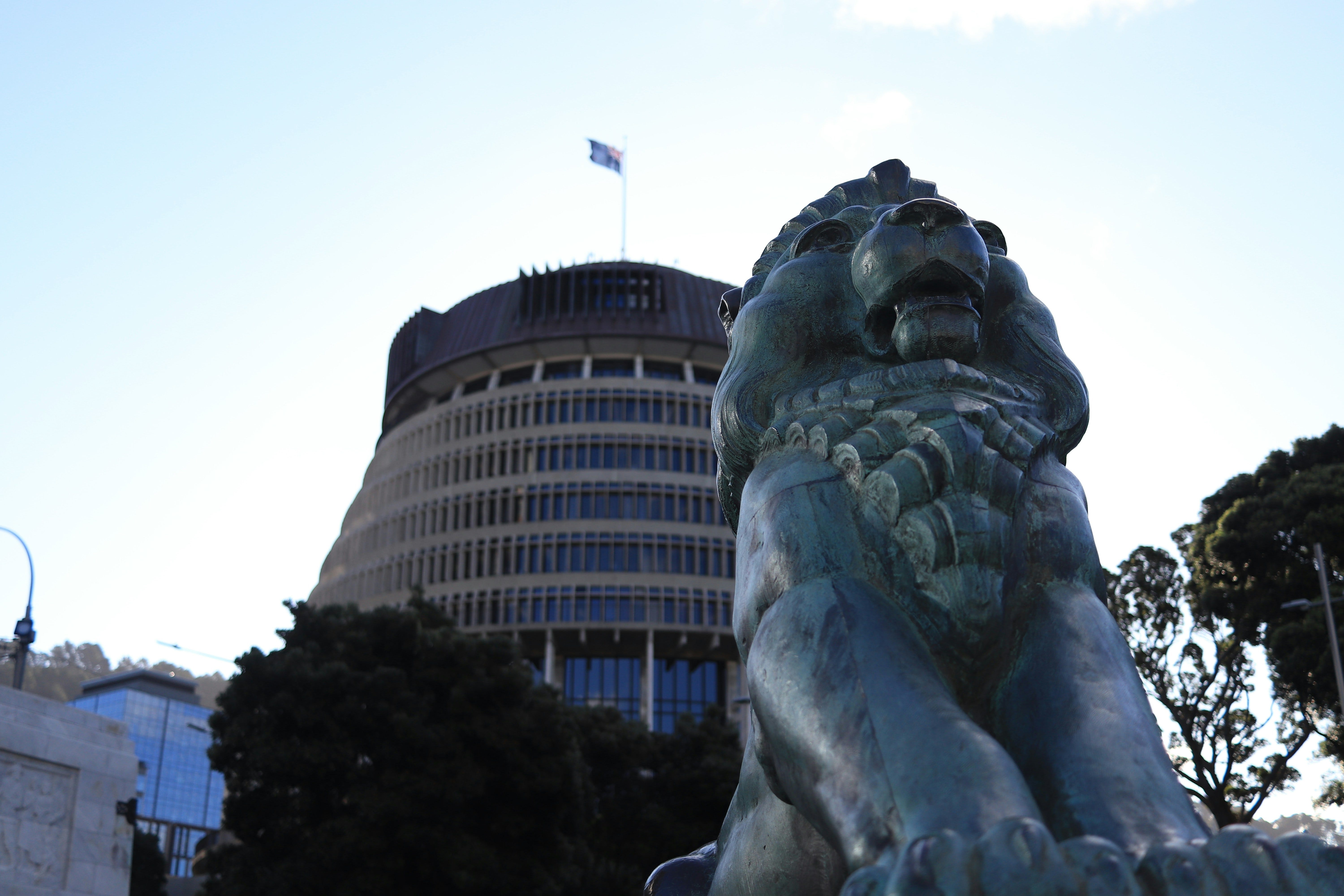
In 1867 the New Zealand parliament made a decision that looked, at the time, like a pragmatic compromise. Māori men were granted the right to vote but the existing property-based electoral franchise excluded most of them from the general rolls. The solution was four dedicated Māori seats, a separate electoral system running parallel to the general one. It was imperfect. It was contested. Critics on both sides had principled objections. The government of the day was not motivated by pure idealism. It passed anyway and New Zealand began building something across generations that nobody would now dream of undoing.
That is the whole story of the New Zealand model. Not a single transformative moment of enlightenment. Not a perfect design implemented by visionaries. A practical decision, made under political pressure, that created the structural conditions for something remarkable to grow.


Canada never made that decision. BC never made that decision. And 157 years later the distance between what that decision produced and what our avoidance of it produced is visible to anyone willing to look honestly.
The four original Māori seats survived for over a century largely unchanged. In 1975 Māori women were given full voting rights within the Māori electoral system. In 1993 New Zealand adopted Mixed Member Proportional representation, a change that transformed what the Māori seats meant in practice. Under MMP, voters cast two ballots: one for a local electorate member, one for a party. Parties win additional list seats based on their share of the party vote. This means Māori parties can win seats far beyond the seven dedicated electorates if their party vote is strong enough. The Māori Party has repeatedly entered parliament with more seats than the dedicated electorates alone would provide. Māori voters choose which electoral roll to join, the Māori roll or the general roll, and that choice is entirely theirs to make and change.
The practical result is structural and durable. Māori political interests cannot be ignored by any government that wants to form a majority. Māori politicians have held cabinet positions including Deputy Prime Minister. Māori-initiated legislation has passed. Coalition agreements have delivered concrete policy outcomes. This is not representation as symbolism. It is representation as leverage, the only kind that produces results.
Parliamentary representation alone could not resolve 150 years of accumulated historical grievances. Nor should it have been asked to. This is the second critical insight of the New Zealand model and the one most often overlooked in Canadian discussions of it.
The Waitangi Tribunal was established in 1975 as a permanent commission of inquiry specifically empowered to hear Māori claims against the Crown for breaches of the Treaty of Waitangi. In 1985 its mandate was extended retrospectively to examine historical breaches going back to 1840. It investigates. It makes findings of fact. It makes recommendations. It has produced over a hundred major reports on everything from specific land confiscations to fisheries rights to the Māori language.
The Tribunal is not a court. Its recommendations are not automatically binding. But its findings have driven hundreds of millions of dollars in negotiated settlements between the Crown and specific iwi. More importantly it performs a function that courts cannot: it examines the political, historical and cultural context of grievances rather than reducing them to legal categories. It gives communities a forum where their history is taken seriously on its own terms.
The architecture is what matters. The Tribunal handles the past. Parliament handles the future. Neither track bogs down the other. Historical grievances are not endlessly weaponized in legislative debates because there is a dedicated institution specifically designed to hear and resolve them. Parliamentary time is not consumed by history because parliament is not the right place to adjudicate it.
Compare this to Canada’s approach. The duty to consult has been developed almost entirely through general court litigation, expensive, slow, case-by-case, producing narrow rulings that open new disputes rather than closing old ones. Truth and reconciliation processes have produced calls to action with no binding mechanism. UNDRIP has been incorporated into BC law with consequences nobody can agree on and courts are still working out. The historical grievance and the ongoing governance question are permanently entangled because we never built the institutional architecture to separate them.
The New Zealand model is not theoretical. It has been running for 157 years and its results are documented.
The Māori language — te reo Māori — was in serious decline by the 1970s. Parliamentary advocacy by Māori politicians led to the Māori Language Act of 1987, which gave te reo official language status. Kura kaupapa Māori, Māori immersion schools, were established and funded. Today te reo is taught in schools across New Zealand, appears on government signage, and is spoken by a growing number of New Zealanders with no Māori ancestry. A language that was dying is being revitalized. This did not happen through land acknowledgements or reconciliation frameworks. It happened because Māori politicians had real votes in the institution that controls education funding.
The Ngāi Tahu settlement of 1998 resolved claims arising from Crown purchases of South Island land in the nineteenth century. The settlement transferred approximately $170 million in assets and formal Crown apologies for specific historical wrongs. The iwi used those assets to build a diversified business portfolio now worth well over a billion dollars. A historical grievance, adjudicated through a dedicated process, converted into economic foundation. This is what resolution looks like when the institutional architecture is designed for it.
Co-governance of natural resources has been established through normal democratic process. The Whanganui River was granted legal personhood in 2017, not through litigation alone but through legislation negotiated between the Crown and Whanganui iwi after years of Waitangi Tribunal engagement. The governance structure gives the river legal standing and requires joint oversight. It is a model being studied by jurisdictions around the world.
Māori culture has not been absorbed or erased by parliamentary participation. It has expanded. The haka is the most visible example but it is not the only one. Māori design, Māori language, Māori values have entered New Zealand’s mainstream not because of government programs designed to promote them but because Māori had the political standing to make their culture matter in the institutions that shape a society.
The New Zealand model is not without conflict. Debates about who has the right to perform haka, moments where Māori feel parliamentary majorities are overriding their interests, disputes about the pace of settlements and the adequacy of remedies: these tensions are real and ongoing. They are also evidence the model works.
Māori have the standing to have these arguments publicly and on their own terms. When a grievance arises it goes to the Tribunal or the courts or the parliamentary floor, institutions with the capacity to hear it and respond. The argument happens inside the system rather than outside it. That is democracy functioning as intended. The alternative, which is what Canada has, is a system where fundamental questions about land and governance are permanently unresolved, permanently weaponized by politicians on all sides, and permanently outside the institutional reach of the people most affected by them.
BC is the most natural laboratory in Canada for a version of this model. The province has the highest proportion of unresolved Aboriginal title questions in the country precisely because so few treaties were signed. The legal uncertainty this creates is not abstract: it is measured in projects delayed, investments deterred, and communities still waiting for economic participation in the wealth generated from their territories.
BC’s legislature is unicameral. There is one chamber. Structural reform requires one decision, not the layered complexity of federal bicameralism. The province has a history of electoral reform discussion, a sophisticated Indigenous legal and political community, and — in DRIPA — a recently demonstrated willingness to acknowledge that the status quo is inadequate even if the response has been incoherent.
The proposal follows directly from the New Zealand precedent. Dedicated Indigenous seats in the BC Legislative Assembly assigned not by geographic riding boundaries but by national and cultural ones, seats held by representatives of Nations and tribal groupings with real votes on real legislation. A BC equivalent of the Waitangi Tribunal, a permanent, properly resourced body with a mandate to hear and settle historical land grievances with finality. Repeal of DRIPA and replacement with legislation that actually delivers what DRIPA claimed to, permanent structural voice rather than an aspirational document that politicians invoke when convenient and abandon when costly.
The objection that parliamentary participation legitimizes colonial structures has been answered in New Zealand not by argument but by outcome. Māori identity and culture expanded under this model. Settlements were reached. Language was revitalized. Governance was shared. The communities still waiting for adequate housing and clean water in BC cannot afford to hold out for a theory of decolonization that has no practical mechanism and no timeline.
A Māori child in Auckland performs the haka at school assembly. A Māori politician sits in cabinet negotiating fisheries policy. An iwi uses its settlement assets to build a business empire. A river has legal standing because a Tribunal heard the grievance and parliament acted on it. A language that was dying is being spoken by people whose great-grandparents never heard it.
None of this was inevitable. All of it was built across generations, through imperfect institutions, by people willing to make practical decisions in the face of principled objections from every direction.
BC has the Indigenous cultures. It has the legal foundation. It has the economic urgency. It has a unicameral legislature clean enough to reform in a single decision. What it has lacked is the political will to make the offer.
The New Zealand experiment is 157 years old. The results are in. The only remaining question is whether BC is willing to look at them honestly and act.
This is a worthy discussion, and a good idea to think about.
New Zealand has a population of approximately 5.35 million, and roughly 20% identify as having Maori descent. Canada has a population of 41.5 million, of which roughly 5% identify as indigenous. This is a big difference.
The question is how much leverage is appropriate under the circumstances. How many seats in parliament, and the power of such a committee, both leverage questions, is where FN (who will want maximum leverage), and the community at large (who will correctly not accept anything looking like a veto) will differ.
5% of seats seems palatable, but anything that outsizes the influence of that voting block needs explanation, justification, and I can't construct an argument in favour that also seems saleable, practical, or ethical. Would FN in Canada accept 5%? I can imagine beneficial cultural influence in this case; great ideas come from everywhere. I don't see this resulting in the kind of leverage FN think they've been given over the last (lost) 10 years.
5% could and should influence, but not have control on decisions that affect the 95%. The history of treaties, the discussions thereof, the lack, are all unsettled, and time marches. The courts can settle what is fact. Regardless... it's 5%. Some people might think this is justified (not me) but regardless, it won't work. Hopefully that's obvious now.
The public correctly resists the narrative construct vilifying our past (white people, identities), and this also gets in the way of a better future, but until that bullshit is gone we can't even have this discussion. People with real, leadership, policy responsibility know this truth:
"I don't care about what you have to say, unless I think you care about me first!"
The statues need to be returned and the stupid, divisive settler/colonial construct needs to be disavowed before people should come to the table because without mutual respect, there's no point at all. Morons making policy seemed to think pitting 5% against 95% would make reconciliation work...? I... can't... even.... lol.