


Raise the idea, in almost any room in this province, that Indigenous nations should hold real seats in the legislature, and you will meet the same two arguments before the coffee has gone cold. Both arrive wearing the clothes of fairness, which is exactly why they work and exactly why they need answering carefully rather than quickly.
The first says Aboriginal rights are race-based. We believe in equal treatment under the law, the argument goes, so a right that attaches to one group by ancestry is a privilege, and privileges by ancestry are the thing equality exists to abolish.
The second says the matter was closed by history. The settlers came, the settlers won, the country was built, and all of it happened a very long time ago. Whatever was owed has long since lapsed.
One argument calls the rights illegitimate at the root. The other calls them expired by the calendar. They point at different things, but they arrive at the same place, and the place is the whole point of the trip: a province that never has to widen the table by a single chair. Both deserve a real answer. Both have one.
Start with the race argument, because it is the more honest mistake of the two and the easier to clear up.
A right that genuinely lived in the blood would behave like blood. It would belong to everyone who carried the ancestry, anywhere on earth, for as long as the line continued, and to no one who did not. Aboriginal rights have never worked that way, for the simple reason that the courts have never understood them that way. In R. v. Van der Peet in 1996, the Supreme Court of Canada set out what these rights actually are and where they come from. They exist, the Court said, to reconcile one historical fact with another: that when the Crown asserted sovereignty, Aboriginal peoples were already here, organized in distinctive societies, occupying and governing the land as they had for centuries. The right flows from that prior occupation and that political existence. It is the recognition of a society that was here first, not a benefit handed down to a bloodline. And notice what that does not require: not a claim to being the first humans ever to stand on this ground, but the plain fact that the Crown arrived to find organized nations already here and in possession, and chose to make agreements with them. You cannot re-litigate who stood on this soil ten thousand years ago to wriggle out of a treaty signed in 1763.
That distinction is not academic hair-splitting. It decides who actually holds a right and who does not. In R. v. Powley in 2003, the Court was asked who counts as Métis for the purpose of exercising a constitutional right, and the answer it gave demolished the race framing on its own terms. There is no blood-quantum test, the Court held. Ancestry alone settles nothing. What a person has to show is membership in a living community — self-identification, a genuine ancestral connection, and acceptance by the community itself. A person can carry Indigenous ancestry and hold no Aboriginal right at all, because the right runs through belonging to a nation, not through a result on a DNA test.
We grasp this everywhere else without effort. When Ottawa signs a treaty with France, nobody calls it a racial preference for the French. It is an agreement between two political communities, and it binds the parties who made it. A treaty or a recognized right held by an Indigenous nation is the same kind of thing — an arrangement between political bodies, carrying obligations in both directions. The only reason anyone paints one as racial and not the other is that they have already decided how they need the argument to come out.
So the relabelling is a swap, and a clever one. Take a political relationship, repaint it in racial colours, then summon the principle of equal treatment that every decent person already carries in their chest, and let that good principle perform a demolition you would never be permitted to do in the open. The equality is real. The fraud is in the substitution. Nobody is asking for a privilege of birth. They are asking for a political relationship to be honoured. Name the swap and there is nothing left standing.
The second argument is older, and it dies harder, so it has earned more than a wave of the hand.
The picture in most heads is straightforward. The settlers arrived, the settlers prevailed, and winning closed the books. It is a tidy story and a flattering one, and it is wrong in the law and wrong in the history both, by a wide margin and on the record.
There was no conquest of Indigenous peoples in this country in any sense a court would recognize. The Crown asserted sovereignty; it did not win the land in war. That is not my phrasing — it is the Supreme Court’s. In Tsilhqot’in Nation v. British Columbia in 2014, the first case in Canadian history to grant a declaration of Aboriginal title, and a British Columbia case at that, Chief Justice McLachlin wrote that when the Crown asserted sovereignty it acquired underlying title to the land, but that this title was burdened from the very start by the pre-existing rights of the peoples already here. And she put the oldest excuse to rest by name. The doctrine of terra nullius — the convenient fiction that the land was empty and waiting — never applied in Canada, she wrote, as the Royal Proclamation of 1763 itself confirmed. The Crown’s own founding document recognized Indigenous nations as distinct peoples holding land that was not simply there for the taking.
In British Columbia none of this is theoretical, and that is the part people from elsewhere tend to miss. Over most of this province the land was never surrendered, never purchased, never treated for at all. That is precisely why the title question is still live, still grinding through the courts a century and a half later. The Tsilhqot’in spent decades in litigation to win a declaration of title to their own territory. Nobody spends that long in court proving he was never conquered if the conquest were a settled fact. The litigation exists because the conquest does not.
And then there is the fact that should have buried this argument generations ago. When Indigenous nations went to war alongside the settlers, they went as allies.
Not as conscripts. Not as subjects marched out by a Crown that owned them. As sovereign partners the Crown courted, leaned on, and could not have managed without. The War of 1812 is the cleanest example we have. Tecumseh’s confederacy fought beside the British, and the historians are blunt about why. Chief Tecumseh fought not for the British but for his own people, for Native independence and for ancestral land the Americans were taking. The nations joined the British side, as the record has it, in exchange for assurances they could keep that land. Britain did not have the men to hold half a continent on its own, and everyone in the room understood it.
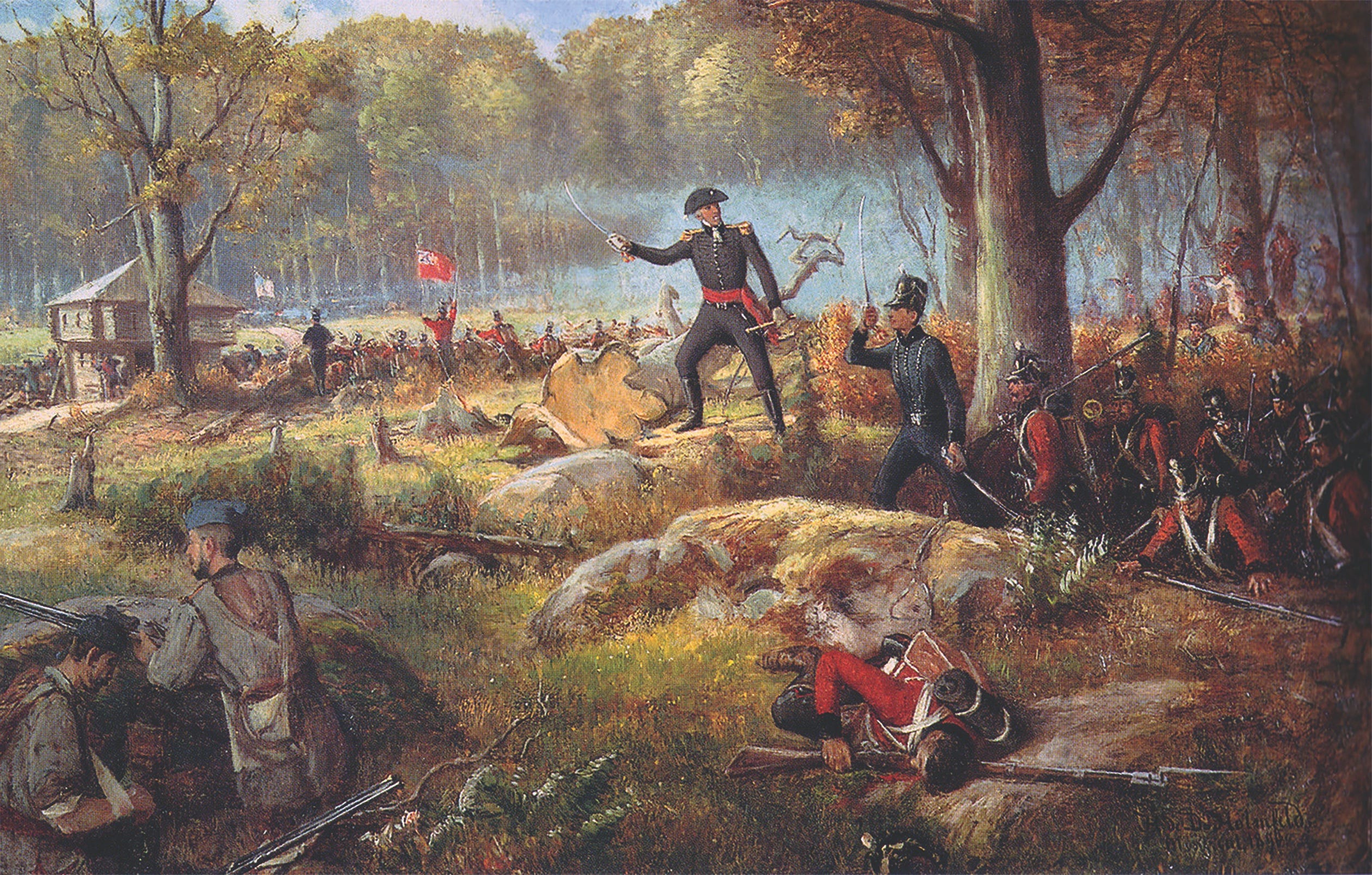
Hold that beside the conquest story and watch it come apart. A conquered subject is not courted. A conquered subject does not choose his war or set his own terms for fighting it. You cannot be the vanquished and the indispensable ally in the same breath. And the archive agrees with the battlefield. Search it as long as you like and you will not find articles of surrender, nor a treaty handing sovereignty up to the Crown. What the records hold instead are alliance treaties and land agreements, every one of them assuming the Indigenous side arrived already holding the sovereignty it was negotiating with. You do not bargain with a party that has nothing to bring to the table.
This is not a fringe reading of the history. It is the work of the people who have actually done the studying — Brian Slattery, whose account of the foundations of Aboriginal rights the Supreme Court has leaned on for decades; Kent McNeil, who traced the common-law roots of Aboriginal title; the Court’s own line of decisions running from Calder in 1973 through Van der Peet and on to Tsilhqot’in. The reasoned judgment is in, and it has been in for a long time. What is missing is not the law or the history. What is missing is the will to act on either.
Set the two arguments side by side, which is how they were always meant to be used. Fail to kill the rights by branding them racial, and you brand them ancient instead. Lose the conquest story under cross-examination, and you fall back on the race framing. Two doors, and the same empty room behind both. The object in either case is to make the question disappear without anyone ever being made to answer it.
And the disappearing act pays. So long as the rights can be cast as either illegitimate or expired, no one is obliged to do the work — to build the seats, draft the structure, widen the table by a chair. The confusion is not the unhappy by-product of a genuinely hard problem. The confusion is the product on the shelf, and there is a whole industry keeping it stocked.
So keep two things in your pocket, because these arguments will find you — in a comment thread, across a kitchen table, usually when you are least in the mood for them.
The rights were never about blood. They are about nations.
And the nations were never conquered. They were allies, and we have spent a long time now declining to give allies the seat that allies are owed.
But the kitchen table is not where this gets settled, and there is a third version of the argument that deserves more respect than the other two, because it deals in no disappearing act at all. It concedes the rights are real and current, looks straight at them, and says: then change the law. Section 35 is not scripture. It was written by people and it can be rewritten by people, through the same constitutional process that produced it. That much is true. It is also, at this moment, a live proposal.
The premier of Alberta, Danielle Smith, has opened the door to exactly that — a conversation among the premiers about reworking the parts of the constitution that govern treaty and Aboriginal rights, on the argument that the courts have stretched Section 35 well past anything that was ever intended. Say this for her against the kitchen-table crowd: she is not pretending the rights are racial, and she is not pretending they expired. She is looking at them honestly and proposing, in the open, to amend them.
She is also, by the only measure that should count for anyone who claims the word, not being conservative at all.
A conservative does not weigh an inherited obligation by whether it has grown inconvenient this year. That was the whole of Burke’s quarrel with the revolutionaries — that they treated the inheritance handed down to them, the agreements and institutions and settled commitments, as furniture to be hauled to the curb the moment it stopped suiting the mood of the season. He understood a country as a partnership across the generations: between the dead who made the promises, the living who are bound to keep them, and the unborn who will inherit whatever we leave standing or leave broken. You do not get to tear up your grandfather’s signature because the bill has come due on your watch. Honouring what you were handed, especially when it costs you something, is not a sentimental flourish on conservatism. It is the spine of it.
And a treaty is the most literal inheritance there is. It was signed by people with the authority to sign it, on the plain understanding that it would bind those who came after. Reopening the constitution to strip a people of the protections their ancestors were promised is not the careful, conserving act it dresses itself up as. It is the radical one. Whatever else you call the man reaching for the eraser, you should not call him a conservative.
That is the offer we still have not made — to honour what was handed down by giving allies the seat that allies are owed. The alternative on the table is to take an eraser to the inheritance and call the erasing prudence. Everything else is the elaborate business of pretending we do not have to.
This is top notch