


For Ryan Painter, who gave this blue collar conservative a serious ear when these ideas were still very rough. Ryan came to conservatism the hard way, walking away from an ideology he had given decades to when principle demanded it, and has worn the scarlet letter of the movement with more grace than it deserves right now. This series is for him.
I want to try to name something. I am not sure I can do it precisely and I am not sure the naming is finished, but I think it needs to begin somewhere and it might as well begin here.
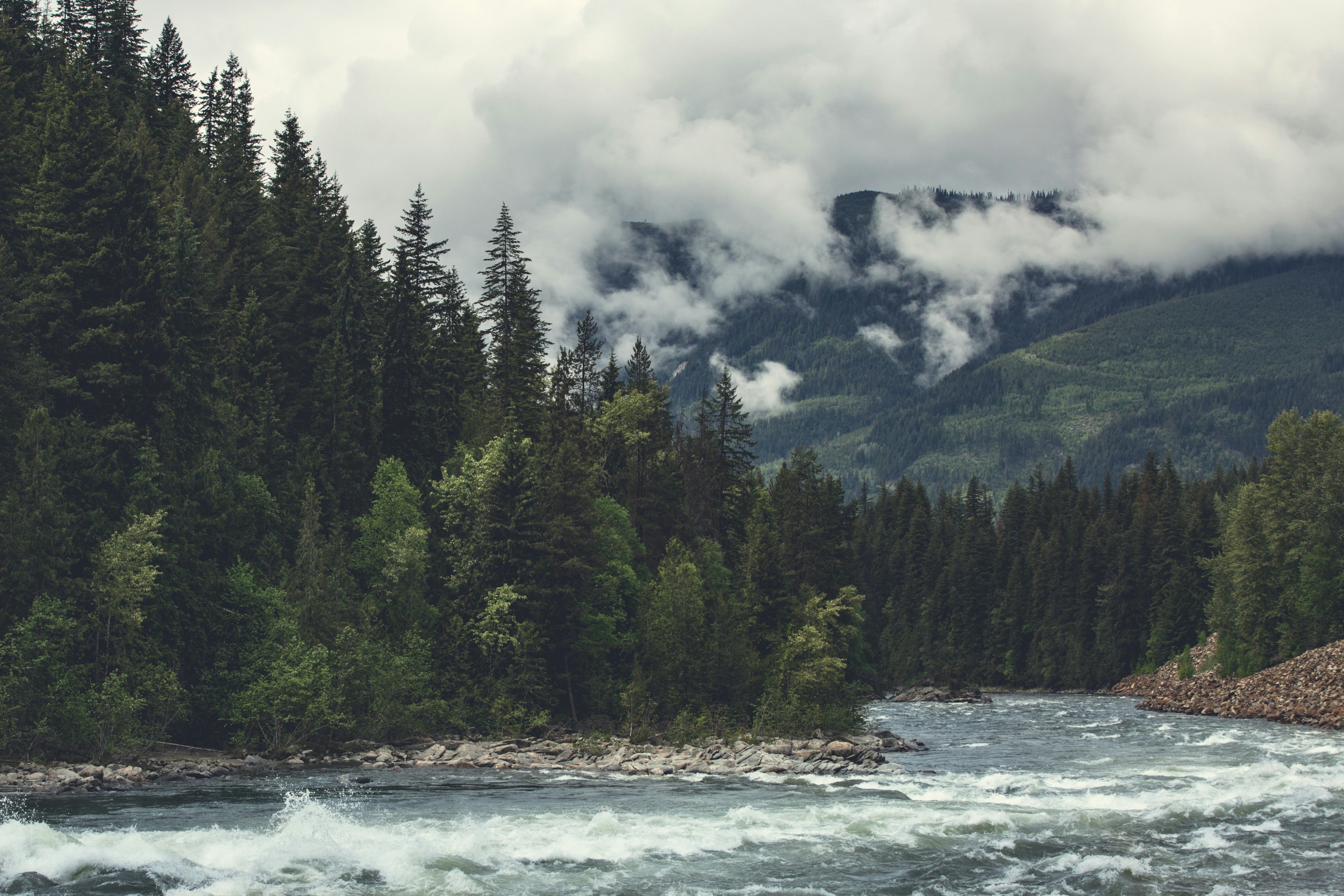
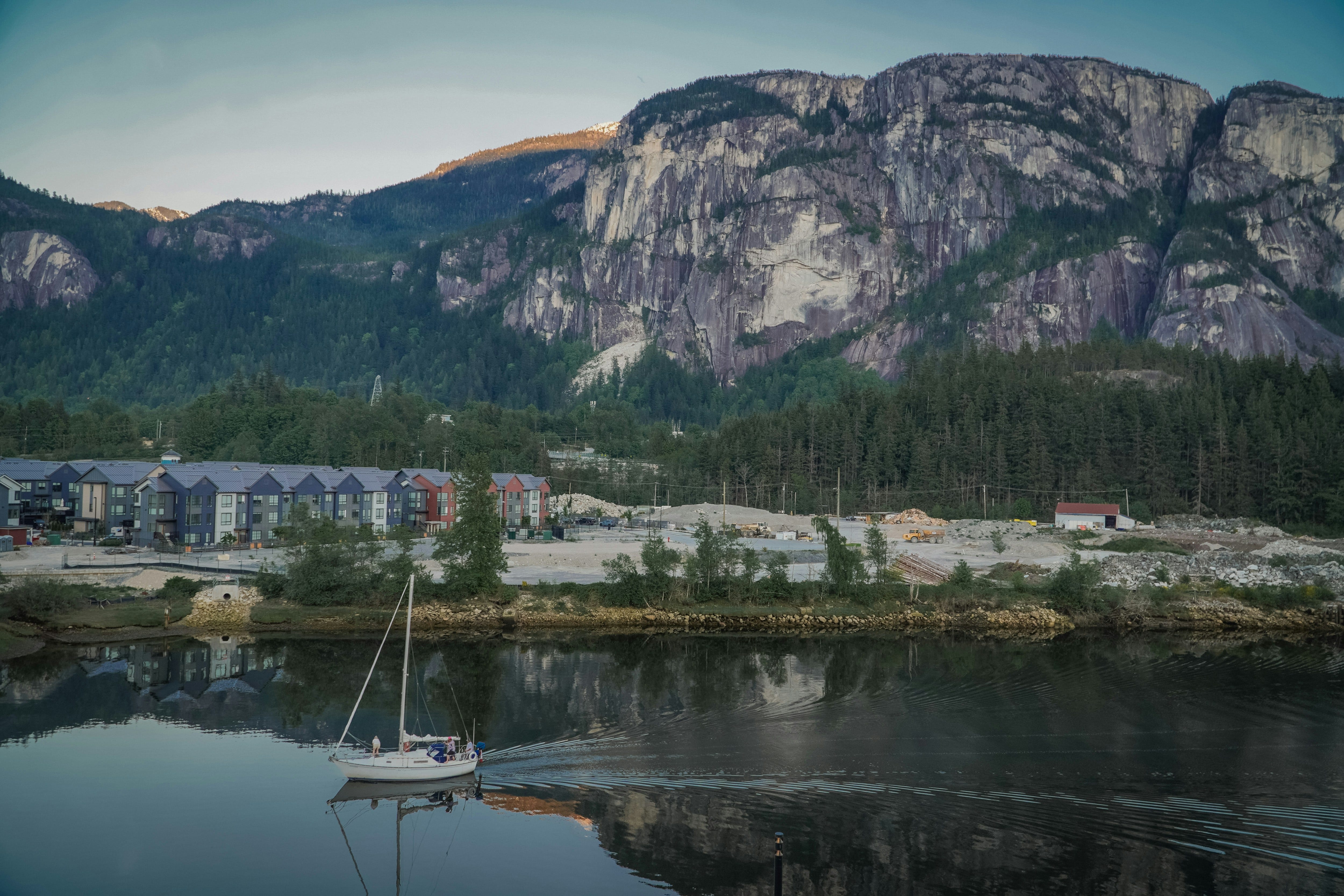
The navy brought me west. I arrived the way sailors arrive, dropped into a place by an institution larger than yourself, expecting to pass through, and then the coast got into you before you noticed it happening. The mountains coming down to the water diving into deep, ancient fjords. The old growth pressing in at the edges of everything casting historical shadows over new development below. The Indigenous place names on every inlet and passage, naming a geography that was fully known and governed long before anyone with my surname arrived. I fell in love with it immediately. I fell in love with the people. And I stayed.
What I found here was an older conservatism than I hadn’t had a name for at the time. Not the tax-cut conservatism of the think tanks. Not the culture-war conservatism imported from American cable news. Something more practical and more demanding, inherited knowledge about how to live well in hard country with the people around you, across difference, without waiting for someone above you to sort it out.
I have been trying to understand for some time why that conservatism has no home in Canadian or British Columbian political life. And I think I am beginning to see why.
The problem is that we have let politicians define modern conservatism.
That is not their job and they are not suited to it. A politician’s primary obligation is winning. Not thinking. Not building. Not preserving. Winning the next election, which means simplifying every argument until it fits on a lawn sign, means speaking to the anxious centre, means sanding every hard edge off every difficult idea until what remains is smooth enough that no one can object to it, which also means no one can be moved by it.
This is not a criticism of politicians as people. It is a description of the incentive structure they operate inside. You cannot ask a person whose survival depends on winning a popularity contest to also be the custodian of a serious intellectual tradition. The two jobs are in fundamental tension.
What should be doing that work, the universities, the intellectual class, the serious journals of conservative thought, has largely abdicated. The academy in Canada has moved so thoroughly into progressive and soft-Marxist frameworks that a student today can complete a graduate degree in political science or history without ever seriously engaging with Burke or Oakeshott or the tradition of classical liberal thought that built the institutions they are studying. Conservative intellectual life has been pushed to the margins of Canadian academic culture and what replaced it in the mainstream did not serve the working person. It served the professional. The credentialed. The comfortable. The people who had already arrived.
The vacuum that created is not being filled by wisdom. It is being filled by noise. The social media influencer who chases engagement and calls it political commentary. The podcast host who packages grievance as philosophy. The leadership candidate who mistakes a list of tax cuts for a governing vision. These are not the same thing as a political tradition. They are the performance of one.
And a party without a serious intellectual foundation is a party waiting to be captured. By whoever organizes first. By whoever writes the biggest cheque. By whoever shows up with a coherent story, however thin that story actually is, when the movement is hungry enough to accept anything that sounds like direction.
This is not hypothetical. It is happening.
Canadian conservatism has always had regional flavours and it matters to understand them because none of them quite fit what I am trying to describe.
Prairie populism is real and powerful and it draws on genuine grievance, the feeling that the centre of the country extracts from the periphery, that eastern institutions do not understand or care about western life, that the people who work the land are invisible to the people who govern it. That feeling is not wrong. But populism as a political mode tends toward destruction rather than construction. It knows what it is against better than what it is for. It distrusts institutions rather than working to reform them. On its best days it is democratic energy that keeps elites honest. On its worst days it is a wrecking ball with no blueprint for what to build in the rubble.
The corporate conservatism of central Canada — Bay Street and rue Saint-Jacques, the think tanks, the business councils — is managerial and primarily interested in stable conditions for capital. It is not without intelligence. But it has no working class in it. It has no land in it. It speaks to the boardroom and the policy conference and it mistakes those rooms for the country. When it looks at a resource community or an Indigenous nation it sees an asset to be optimized or a liability to be managed. It does not see people with legitimate claims on the institutions that govern them.
Maritime conservatism is the closest cousin to what I am reaching for. It has the community rootedness, the practical instinct, the distrust of grand ideological projects. But it operates in a different geography with different history. The specific tensions of this coast, the land question, the resource economy, the Indigenous title, the particular working class that has grown here, are not its tensions.
None of them quite produce what this coast actually needs.
The working class in British Columbia is not a manufacturing class. We do not have the factory towns of Ontario or the old mill towns of Quebec. Our working class is on and in the land. Miners, forestry workers, fishermen, truck drivers, the people who extract and move the physical substance of this province. That work builds a specific relationship with the natural world, not romantic, not ideological, but practical and intimate and honest in ways that no policy paper can replicate.
A fisherman knows what the salmon run means not because they read a report but because their livelihood depends on it and their father’s did before him. A forestry worker knows what a clearcut does to a watershed not from a university lecture but from watching what happens to the streams afterward, watching the erosion, watching what comes back and what doesn’t and how long it takes. A miner knows the land the way surgeons know bodies — from the inside, with attention to consequences.
This is where the environmental argument actually lives, and it is a conservative argument, not a progressive one. Edmund Burke’s definition of society as a partnership between the dead, the living, and the unborn is an environmental argument as much as a political one. You do not consume the inheritance. You tend it. You pass it forward. Conserve is literally in the name.
Theodore Roosevelt was a conservative and he built the US national parks system not despite his conservatism but because of it. The land was worth preserving because it belonged to the permanent things, the things a serious civilization protects precisely because they cannot be replaced once they are gone. The old growth forests of this coast. The salmon runs. The coastal ecosystems that sustained life here for thousands of years before anyone thought to call it British Columbia. These are inheritance. A conservatism that treats them as resources to be extracted until exhausted is not conservatism. It is liquidation dressed in conservative language.
The modern right’s hostility to environmental thinking is not rooted in conservative philosophy. It is rooted in the specific alliance between conservative parties and extractive industries that produces short term political returns at the cost of the permanent things. It was imported from American Republican politics and it has colonized Canadian conservative thinking in ways that have cost us both credibility and coherence. There is no philosophical obligation to it. A conservatism serious about stewardship sheds it without apology.
And then there is the question this coast cannot avoid, the one that every other flavour of Canadian conservatism has found ways to sidestep or defer or manage without resolving.
The land question. Indigenous title. The nations that were here before the provinces existed, whose governance of these lands and waters produced the salmon runs and the coastal ecosystems that the working class of British Columbia depends on for its livelihood to this day.
I will not pretend to have all of this worked out. What I will say is that I find the way the current conservative conversation approaches this question, as a regulatory burden to be reduced, as an obstacle to permitting timelines to be cleared, as an inconvenient legacy requiring a clean repeal and a moving on, to be both philosophically inadequate and practically foolish.
Philosophically inadequate because classical conservatism is built on the legitimacy of inherited rights and long standing claims. Burke’s entire project was to defend what had been earned and established against revolutionary disruption. A conservatism that applies that principle selectively, defending property rights and constitutional order for settlers while treating Indigenous title as an irritant, is not applying a principle at all. It is applying a preference and calling it a principle.
Practically foolish because the land question does not go away because you stop talking about it. It accumulates. The communities fall further behind by every measurable indicator. The legal claims get stronger, not weaker. The political instability grows. You repeal DRIPA today and you have solved exactly nothing. You have removed an inadequate framework without building anything real in its place and you have sent a message to the nations most connected to the lands and waters this working class depends on that they are not partners, they are problems.
I believe Indigenous nations should have guaranteed seats in the legislature. Not as a favour. Not as reconciliation theatre. As the structural recognition that they are governing peoples with a legitimate claim on the institutions that exercise authority over their territories. New Zealand has operated this way for 157 years inside the same Westminster parliamentary tradition we inherited. It produces real political partnership between peoples who share a country. The haka is performed in the New Zealand parliament. That is what genuine inclusion over generations actually looks like in a culture. We have nothing like it and the absence is visible.
The through line connecting all of this, the stewardship of land, the dignity of working people, the environmental inheritance we are obligated to protect, the legitimate claims of Indigenous nations, the supremacy of parliament as the place where these questions get resolved rather than endlessly deferred to courts and consultation frameworks, is classical liberal thinking extended honestly into the conditions of this coast in this century.
Locke believed in the right of people to the product of their labour and the land they work. Burke believed in the obligation to preserve and transmit inherited value. Macdonald — for all his considerable failures and the weight of what those failures cost Indigenous peoples — understood that building a nation required institutions large enough to hold everyone. Diefenbaker gave status Indians the vote in 1960 not because it was popular but because his understanding of the social contract would not permit their exclusion. These are the intellectual ancestors of the tradition I am trying to describe.
I am calling it west coast conservatism because that is what it is. Shaped by this geography, grounded in this history, honest about these specific tensions. Not imported. Not franchised. Not assembled from the anxieties of a different coast and a different class of people with different problems. Something that starts from the land and the people who live on it and the obligations that come with both.
I am a sailor who left his own family and land to come west, and I’ve never left. My family is here now and this is my land today. I have no credentials and no institutional affiliation and I do not have all of this fully worked out.
What I have is a conviction that the thing I am describing is real and that it is missing and that its absence is costing us something we may not easily recover.
If you recognize any of this — if something in here sounds like what you have been trying to say and couldn’t quite find the words for — then pull up a chair.
This conversation is just beginning.
I have lived in the Prairies and Ontario for decades, as well as here in BC. Your descriptions of Conservatism in each of those places misses the mark a bit. My job had me criss-crossing the country, developing leadership, addressing culture and yes, the perception you describe prevails, but it does not survive living there.
It was always a curious characteristic of the west to hear, "we're so different; nobody understands". People are not different here, a truth that only reveals with substantial time spent in different locations.
Ontario conservatism is much more practical, real politik, compared to BC. The boardrooms exist, but they are too small a voting block. The vast majority of Ontarians are working people in manufacturing, trades, services. Far fewer as a % work for a government job, including the military... a much larger % face 100% responsibility for their financial security. There is distinctly less mental masturbation, analysis paralysis, and more experience and maturity about human nature brought to bear in policy decisions. Peace, order and good government where many people live in close proximity requires it. (I attended 2 riots in Toronto that barely made the news.) We're not there yet, but increasing population and painful experience will get us there.
My experience with Prairie conservatism parallels the farmer meme. Common sense is elevated to the level of sainthood, whether it prevails or not. Tall poppy syndrome is real and will limit progress if it's not acknowledged. Populism is easier there, but can't trump "common sense."
To the point of your terrific piece, the many nuances across the country are shaped in large part by geography, and how that geography becomes our lifestyle.
Of course we need to be good stewards of our environment! True conservatism, to me, equals good stewardship of all resources (the environment, public money, public assets, public employees, our institutions.) The quality of our stewardship and governance is in direct proportion to our honesty about human behaviour. Governance, when it works, is simply the effort to get a good result when human beings are making choices, with their deeply biased filters obscuring the "truth" needed for better decisions.
Many people, including me, reject the current version of reconciliation and compensation because it's disrespectful to the community. There is no justification for, "well, it was done to us, first", any more than among 2 year olds, or any dispute in a playground. People understand this point intuitively. Even if there were any basis for this justification, and every philosophy student knows there isn't after the first week of the first class, experience and practical leadership knows it's a failure from the start.
Smart communities accept a few great truths about people.
Here's one:
"I don't care about what you have to say unless I think you care about me."
So, how well are my policies about driving 30 kph, supporting bike lanes, supporting environmentalism, or (most of all) supporting reconciliation with FN going to go when the strategy seems to depend on creating an insane moral hierarchy, vilifying parts of the population, ignoring the feelings of huge portions of the community? Throwing statues into the harbour with no consequences, destroying traffic with bike lanes and doubling down on "cars are immoral", not enforcing any rules for cyclists, apologizing for property criminals and refusing to prosecute them, and on and on. In my experience the results are all predictable.
The worst part of this immaturity is that it doesn't even understand how uninformed it is. "Evidence based" is utter marketing bullshit. Experienced leaders know the kind of political culture promoted here means you'll be surprised every time: no-one is bothering to tell you how they feel any more because they see you as deaf... because you are.
Fantastic article and thinking as usual Eric. Thank you